Using Oats to Stretch Breakfast and Lower Weekly Grocery Bills
Breakfast is one of the most repeated meals in a household, which means small decisions about ingredients tend to accumulate over a week and a month. Rolled oats are frequently discussed in budget-focused cooking because they are shelf-stable, versatile, and can be prepared in several different formats from a single bag. For a family of four, understanding how one staple can move between porridge, granola, and baked bars offers a useful way to think about weekly grocery planning without relying on a single rigid routine.
This guide focuses on method rather than prescription. It outlines how rolled oats are typically used across three breakfast formats, how cost estimates per serving are usually calculated, and which variables affect those estimates. Actual spending depends on the store, region, season, brand choice, and household appetite, so the figures described here should be treated as illustrative reference points rather than fixed numbers. The aim is to show a transparent framework that a household can adapt to its own circumstances.
Home Plate Kitchen approaches breakfast planning as a process of comparing formats, portion sizes, and complementary ingredients. The sections below describe each oat-based format, explain how per-serving costs are estimated for four people, and note the practical factors that influence both preparation and budget outcomes.
Understanding Rolled Oats as a Breakfast Base
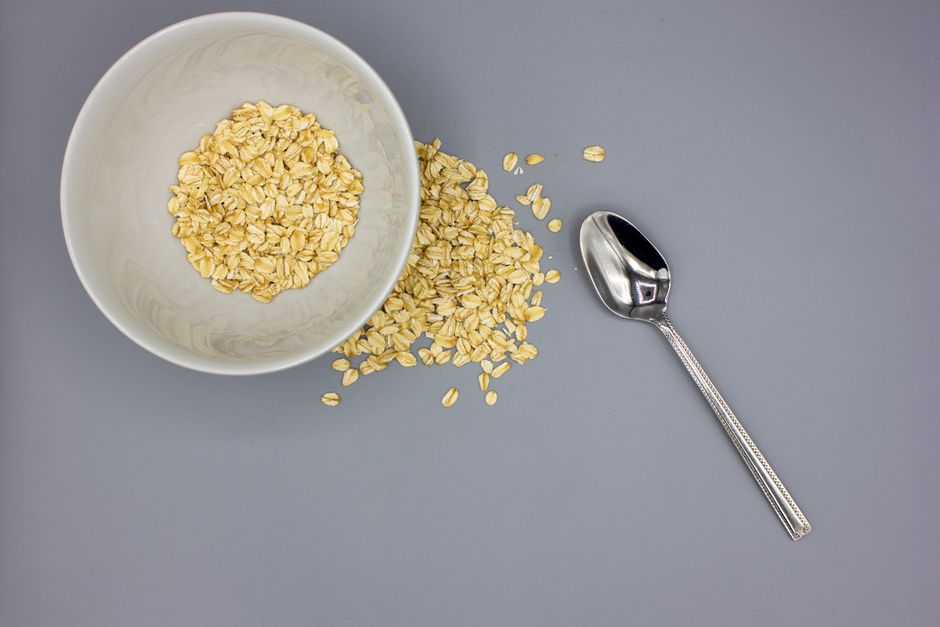
Rolled oats are produced by steaming and flattening oat groats, which gives them a flatter shape and a shorter cooking time than steel-cut oats. In the United States, rolled oats are commonly sold in canisters or bulk bins, and the difference between these formats mostly concerns packaging, storage, and unit price rather than the underlying grain. For breakfast purposes, the key characteristics are absorbency, texture after cooking, and how well the oats hold together when baked.
Nutritionally, oats are generally described as a source of complex carbohydrates and fiber, and they are often used as a base because they pair with both sweet and savory additions. From a cost perspective, the important point is that dry oats expand considerably when cooked with liquid, so a relatively small dry weight produces a larger finished portion. This expansion is central to why oats are frequently mentioned in budget-oriented breakfast discussions, and it also means portion calculations should be done on dry weight for consistency.
Storage also affects practical cost. Oats kept in an airtight container in a cool, dry place typically maintain quality for an extended period, which reduces the risk of waste from spoilage. Households that buy larger quantities usually benefit from dividing the supply into smaller containers so that the main stock is opened less often. These are general handling considerations rather than strict rules, and the appropriate approach depends on kitchen space and turnover rate.
It is also useful to distinguish rolled oats from instant oats and steel-cut oats when planning. Instant oats cook faster but have a finer texture, while steel-cut oats have a chewier bite and longer cooking time. Each can work in breakfast formats, but the recipes and cost estimates in this guide assume regular rolled oats unless otherwise noted, because that is the most common all-purpose option in U.S. grocery stores.
Porridge: The Simplest Format and Its Cost Structure
Porridge is the most direct use of rolled oats: oats are simmered with water or milk until they thicken, and the finished bowl is adjusted with additions such as fruit, nuts, seeds, or a small amount of sweetener. The method is straightforward, which makes it a useful baseline for cost comparison. A typical ratio is one part rolled oats to two or three parts liquid by volume, depending on the desired consistency, and cooking time is generally a few minutes on the stovetop or a short interval in a microwave.
For a family of four, per-serving cost estimates usually begin with the dry oat quantity. If a household uses roughly half a cup of dry oats per serving, then four servings require about two cups of dry oats. The cost of those two cups depends on the unit price of the package purchased. Because unit prices vary widely by retailer, region, and package size, the most transparent approach is to record the price paid, divide by the number of cups or ounces in the container, and multiply by the quantity used. This produces a per-batch figure that can then be divided by four.
Liquid and toppings are the second component. Water adds no ingredient cost, while milk or a milk alternative adds a variable amount depending on type and volume. Toppings such as fresh fruit, nuts, or seeds can shift the per-serving estimate substantially, sometimes more than the oats themselves. A practical method is to estimate the oat base separately from the add-ins, so a household can see which part of the bowl is driving the total. This separation also makes it easier to compare porridge with granola and bars on a like-for-like basis.
Portion size is a third factor that influences the real cost per person. Appetite varies by age and activity level, so a single nominal serving may not match what each family member consumes. Recording actual dry weights used over a few mornings gives a more realistic average than relying on package serving suggestions. The resulting figure is a household-specific estimate, and it can be revised as habits and preferences change.
Granola: Batch Baking and Ingredient Balance
Granola combines rolled oats with a binder and optional additions, then bakes until the mixture is dry and clustered. A common approach mixes oats with a liquid sweetener and a fat, spreads the mixture on a baking sheet, and bakes at a moderate temperature with occasional stirring to promote even drying. Nuts, seeds, and dried fruit are frequent additions, and the order in which they are added depends on how much heat they can tolerate without scorching.
From a cost standpoint, granola differs from porridge because the add-ins and the binder often represent a larger share of the total than the oats. Nuts and dried fruit tend to be the most expensive components per unit weight, while the oats serve as the volume base. For a family of four, a transparent estimate lists each ingredient with its purchase price and the amount used in a batch, then divides the batch total by the number of servings the batch yields. Because granola is calorie-dense, serving sizes are usually smaller than porridge servings by volume, which affects how the per-serving figure compares.
Batch size and frequency also matter. A larger batch may reduce the per-serving cost if ingredients are bought in larger units, but only when the household can store the finished product well and consume it before quality declines. Granola stored in an airtight container generally keeps for a period of weeks, though humidity and exposure to air affect crispness. Households that prefer variety may find smaller, more frequent batches easier to manage even if the unit cost is slightly higher.
Home Plate Kitchen notes that granola is often used as a partial rather than complete breakfast, paired with yogurt or milk, which changes the effective cost per morning meal. Estimating the granola portion and the accompanying dairy or alternative separately gives a clearer picture of the total breakfast cost and supports more consistent weekly planning.
Baked Oat Bars: Structure, Portions, and Planning
Baked oat bars use rolled oats as a structural base along with a binder that helps the mixture hold together after cooling. Common binders include mashed fruit, syrups, and nut or seed butters, and the choice of binder influences both texture and cost. The mixture is pressed into a lined pan, baked until set, cooled thoroughly, and then cut into portions. Cooling is an important step, because bars cut while warm tend to crumble and produce uneven portion sizes.
Cost estimation for bars follows the same ingredient-listing method used for granola. Each component is priced and measured, the batch total is calculated, and the total is divided by the number of bars obtained after cutting. The number of bars depends on pan size and the intended portion, so households often find it useful to standardize the cut so that comparisons across batches remain meaningful. For a family of four, a batch cut into a set number of portions can be mapped directly onto breakfasts across several days.
Bars are frequently described as a convenience format because they can be prepared ahead and stored, which may reduce the need for last-minute purchases during busy mornings. This convenience is a workflow consideration rather than a guaranteed financial outcome; whether it affects overall spending depends on how the household would otherwise handle those mornings. Storage conditions, wrapping, and shelf life all influence how long a batch remains suitable to eat.
Ingredient substitution is common in bar recipes, and substitutions alter the cost estimate. A household that replaces an expensive add-in with a lower-cost option changes the batch total accordingly, so any substitution should be reflected in the tracking sheet. Keeping notes on which substitutions worked well supports more consistent planning over time.
Building a Transparent Weekly Cost Estimate
A practical way to compare these three formats is to build a simple record that lists ingredient, purchase price, package size, amount used, and servings yielded. This format allows a household to calculate a per-serving figure for each breakfast and to see how the figures change when prices or portion sizes shift. The record does not need to be elaborate; a notebook or a simple spreadsheet is sufficient, and the main value comes from consistency rather than precision.
- List each ingredient with the price actually paid and the package size, so unit costs can be recalculated when prices change.
- Measure dry oats by weight or volume consistently, and note whether the figure refers to dry or cooked weight.
- Record the number of servings actually obtained, including any partial portions, rather than relying on package suggestions.
- Separate base ingredients from optional add-ins so the effect of each can be reviewed independently.
- Review the record weekly or monthly and note which variables, such as store choice or brand, appear to influence the totals.
Several external factors affect these estimates. Regional pricing, seasonal availability of fruit, store format, brand positioning, and household appetite all introduce variation. Because of this, a per-serving figure is best understood as a contextual reference rather than a fixed target. Two households using identical methods may arrive at different numbers, and the same household may see different figures from one month to the next.
Cost estimates are most useful when the method is documented clearly enough that another person could reproduce the calculation and understand which assumptions were made.
Home Plate Kitchen frames oats as one component within a broader breakfast plan that may include eggs, dairy, fruit, and other staples. Comparing formats on a consistent basis helps a household see where the oat-based options fit and how they interact with the rest of the weekly basket. The approach described here is informational and methodological, and it is intended to support informed planning rather than to predict specific spending outcomes.