Sharpening and Storing Knives to Cut Prep Time in the Kitchen
In many home kitchens, the difference between efficient prep work and a frustrating session at the cutting board often comes down to the condition of the knife. A blade that has lost its edge requires more pressure and sawing motions, which can slow down chopping and increase fatigue. Understanding how to maintain that edge—specifically through routine honing on a steel—and how to store the knife properly between uses are foundational skills for any cook. This guide outlines the process of honing a kitchen knife on a steel and offers practical storage methods, focusing on angle consistency and the value of a regular routine.
Honing is often confused with sharpening, but the two serve different purposes. Sharpening removes metal to create a new edge, while honing realigns the existing edge that has been bent or rolled during normal use. Because honing is a maintenance task rather than a repair task, it can be performed frequently without significantly wearing down the blade. When done correctly, honing helps maintain a straight, efficient edge that glides through ingredients, which can contribute to a smoother and faster prep experience. However, the effectiveness of honing depends on using the correct angle and technique, and results will vary based on the knife’s steel and the user’s consistency.
The following sections break down the honing process step by step, discuss the importance of angle and routine, and explore safe storage options. While these practices are widely used, they are not a substitute for professional sharpening when a knife is truly dull or damaged. Instead, they are part of a broader approach to knife care that respects the tool and the tasks it performs.
Understanding the Role of Honing in Knife Maintenance
Honing is a maintenance technique that uses a honing steel—a rod made of steel or ceramic—to realign the microscopic teeth of a knife’s edge. Over the course of normal cutting, these teeth can bend or roll to one side, causing the knife to feel dull even though the edge itself is still intact. By running the edge along a honing steel at the correct angle, the metal is gently pushed back into alignment, restoring the knife’s cutting efficiency. This process is distinct from sharpening, which involves removing metal to create a fresh edge and is typically done less frequently, often with a whetstone or a professional service.
Regular honing can be part of a routine that supports consistent cutting performance. When a knife is honed before or after each use, the edge remains straighter for longer, which may reduce the need for aggressive sharpening. However, honing does not fix a dull knife that has lost its fundamental edge geometry; in that case, sharpening is required. It is also important to note that honing steels come in different materials and grits. A fine diamond steel removes a small amount of material and can be more aggressive, while a smooth steel is gentler and better suited for routine maintenance. The choice depends on the knife’s hardness and the user’s preferences.
Another key consideration is the angle at which the knife is honed. Most Western-style knives have an edge angle of about 20 degrees per side, while many Asian-style knives are ground at a narrower angle, often around 15 degrees per side. Using the wrong angle can fail to realign the edge or, worse, create a micro-bevel that changes the knife’s cutting characteristics. Therefore, before beginning, it is wise to know the approximate angle of the knife’s edge. This information is sometimes provided by the manufacturer, and it can guide the honing process. For those unsure, a common approach is to start with a 20-degree angle for typical kitchen knives, adjusting as needed based on performance.
Step-by-Step Guide to Honing on a Steel
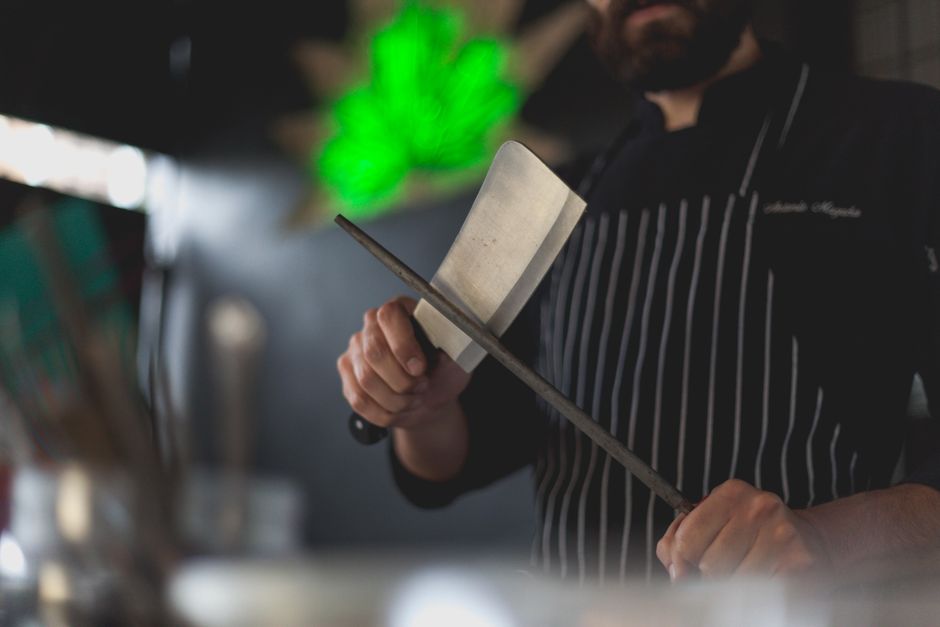
The honing process itself is straightforward, but attention to detail makes a difference. Begin by placing a damp towel on the counter to stabilize the honing steel. Hold the steel vertically with the tip resting on the towel and the handle pointing upward. If the steel has a guard, keep your hand behind it for safety. Then, take the knife in your dominant hand and place the edge against the steel near the handle at the desired angle—approximately 20 degrees for most Western knives. To find this angle, imagine the knife is slicing a thin layer off the surface of the steel; a common visual is to stack two coins under the spine of the knife, though this is a rough guide.
Maintain a light pressure and draw the knife down and across the steel in a sweeping motion, moving from the heel to the tip. Use the entire length of the steel and the entire length of the blade. Repeat this motion on the other side of the blade, alternating sides with each stroke. About five to ten strokes per side are generally sufficient for routine maintenance. It is crucial to keep the angle consistent throughout each stroke; if the angle varies, the edge may not be realigned evenly. Speed is less important than control, so start slowly and focus on maintaining the angle.
After honing, wipe the blade clean with a cloth to remove any metal particles. Then, test the edge by slicing through a piece of paper or a soft tomato. If the knife still struggles, additional honing strokes may be needed, or the knife may require sharpening. It is also worth noting that honing should be done when the knife is not in use for cutting, to avoid distractions. Some cooks prefer to hone before each use, while others hone once a week; the frequency depends on how often the knife is used and the ingredients being cut. For heavy use, more frequent honing may be beneficial, but over-honing with an aggressive steel can wear the edge prematurely. Observing the knife’s performance and adjusting the routine accordingly is a practical approach.
Establishing a Routine for Consistent Results
Consistency is key to effective knife maintenance. A routine that includes honing at regular intervals helps ensure the edge remains aligned and the knife performs predictably. One common approach is to hone the knife briefly before each cooking session, using just a few strokes per side. This habit takes less than a minute and can make a noticeable difference in cutting ease. For those who prefer a less frequent schedule, honing once a week for home cooks who use their knives daily is another option. The important factor is to make honing a regular part of knife care, rather than an occasional afterthought.
In addition to frequency, the routine should include checking the knife’s edge for damage. If the blade has nicks or chips, honing will not repair them, and sharpening may be necessary. Also, the honing steel itself should be cleaned periodically to prevent buildup of metal particles, which can affect its effectiveness. A simple wipe with a cloth after each use is usually sufficient. Storing the honing steel properly—typically in a drawer or on a magnetic strip away from moisture—helps maintain its condition.
It is also helpful to integrate honing with other kitchen habits. For example, after washing and drying a knife, honing it before putting it away can serve as a reminder. Alternatively, honing can be part of the setup before starting a recipe. By linking honing to an existing routine, it becomes a natural part of kitchen work rather than a separate chore. Over time, this consistency contributes to better knife performance and may reduce the need for frequent sharpening, though this depends on the knife and usage patterns. Ultimately, the goal is to maintain a functional edge that supports efficient prep work, and a routine honing practice is one element of that.
Safe Knife Storage Practices
Proper storage is essential for protecting both the knife and the user. A knife that is stored loosely in a drawer can collide with other utensils, dulling its edge and potentially causing injury when reached for. Therefore, selecting an appropriate storage method is important. Common options include magnetic knife strips, in-drawer knife trays, knife blocks, and blade guards. Each has its advantages and considerations. Magnetic strips keep knives visible and accessible but require careful placement to avoid accidents, especially in households with children. In-drawer trays keep knives separated and protected but may take up drawer space. Knife blocks are convenient but can harbor moisture and bacteria if not cleaned regularly. Blade guards are portable and protect the edge during transport or storage in a drawer.
Regardless of the method chosen, the knife should be completely dry before storage to prevent rust and corrosion. Moisture is a knife’s enemy, particularly for carbon steel blades. Also, knives should not be stored with other metal objects that could scratch or chip the edge. If using a magnetic strip, ensure the knife is placed with the edge facing away from the strip to avoid dulling. For blade guards, choose ones that fit the knife properly and are easy to clean. In-drawer trays should have slots that hold the knife securely without putting pressure on the edge.
Another aspect of safe storage is location. Knives should be kept out of reach of children and away from areas where they might be knocked over. Storing knives in a dedicated spot also makes them easier to find and encourages proper handling. For those who use a knife block, placing it in a dry, well-ventilated area helps prevent moisture buildup. Regular cleaning of the storage solution is also advisable to maintain hygiene. By combining proper honing with safe storage, the knife remains in good condition and ready for use, which can contribute to a more efficient and enjoyable cooking experience.
Common Mistakes to Avoid
Even with good intentions, some common mistakes can undermine the benefits of honing and storage. One frequent error is using too much pressure when honing. Excessive force can damage the edge rather than realign it, and it can also create an uneven angle. Light, controlled strokes are more effective. Another mistake is neglecting to hone the entire length of the blade. Many people focus on the middle section, leaving the heel and tip untouched. This can result in an uneven edge that performs poorly. It is important to move the knife across the steel so that the entire edge contacts the steel from heel to tip.
Another common issue is using a honing steel on a knife that is already dull. Honing is not a substitute for sharpening; if the knife has lost its edge, honing will not restore it and may even cause further rounding. A knife that no longer cuts easily through paper or tomatoes likely needs sharpening. Additionally, some people hone their knives at the wrong angle, often too steep, which can create a micro-bevel and reduce cutting efficiency. Knowing the knife’s angle and maintaining it consistently is crucial. Finally, storing a knife while it is still wet can lead to rust, especially with high-carbon steel knives. Always dry the knife thoroughly before putting it away.
By being aware of these pitfalls, cooks can adopt more effective practices. It is also worth noting that honing steels themselves require care. A steel that is worn or damaged may not realign the edge properly. If the steel has grooves or is visibly worn, it may be time to replace it. Additionally, using a ceramic steel on a very hard knife can be less effective than a diamond steel, so matching the steel to the knife is beneficial. For those uncertain about the right equipment or technique, seeking guidance from a professional sharpener or a reputable kitchen resource can provide clarity. At Home Plate Kitchen, we emphasize the importance of proper technique and routine in knife maintenance, and we encourage cooks to view honing and storage as integral parts of their kitchen practice.